


Key Takeaways
- Refraction is the part of your eye exam that finds your glasses or contact lens prescription.
- It measures how light focuses inside your eyes so you can see clearly near and far.
- A refraction can spot nearsightedness, farsightedness, astigmatism, and age-related focus changes.
- The test is quick, comfortable, and uses a device called a phoropter.
- Vision plans and medical plans can cover different parts of your visit.
You sit in the exam chair, look at a chart across the room, and the letters look a little fuzzy. Refraction is the step that helps correct that. At Eyes on Westlake, it’s the part of your eye exam that pins down your exact prescription.
Refraction measures how light focuses inside your eyes so your eye doctor can find the lens power that helps you see clearly at every distance.
Refraction Explained in Simple Terms
When light enters your eye, it needs to land in just the right spot on the back of your eye to create a sharp image. If it lands slightly off, things look blurry.
Refraction shows your eye doctor how far off that focus is and what correction can bring it back into view. The result is your exact prescription.
Refraction vs. the Full Eye Exam
Refraction and a full eye exam are not the same thing, though they go hand in hand. Refraction covers just the prescription piece. It answers one question: what lenses help you see your sharpest?
A full eye exam looks at the bigger picture. Your eye doctor checks your overall eye health, looks at the surface and inside of your eyes, and screens for conditions that don’t always come with symptoms.
Together, the two give you a clear snapshot. One tells you how well you see. The other tells you how healthy your eyes are. You want both working for you at every visit.
Vision Problems a Refraction Can Spot
Common Refractive Errors
Most blurry vision comes down to how light bends as it enters your eye. A refraction can reveal a few of these patterns:
- Nearsightedness, or myopia, makes faraway things like road signs look blurry.
- Farsightedness, or hyperopia, makes up-close things like a menu look blurry.
- Astigmatism can make objects look blurry or stretched at any distance.
Once your eye doctor knows which pattern fits you, the right prescription can bring your world back into focus.
Age-Related Focus Changes
Around your mid-40s, you might notice yourself holding your phone farther away to read a text. That shift is called presbyopia. It’s a natural change in how your eyes focus up close.
Your prescription can also drift over the years. That’s normal. Regular visits help our team keep your lenses matched to how your eyes see right now.
What Happens During Your Refraction Test
The test is quick and hands-off for you. Here’s how it usually goes:
- Your eye doctor checks how light bends in your eyes to get a starting point.
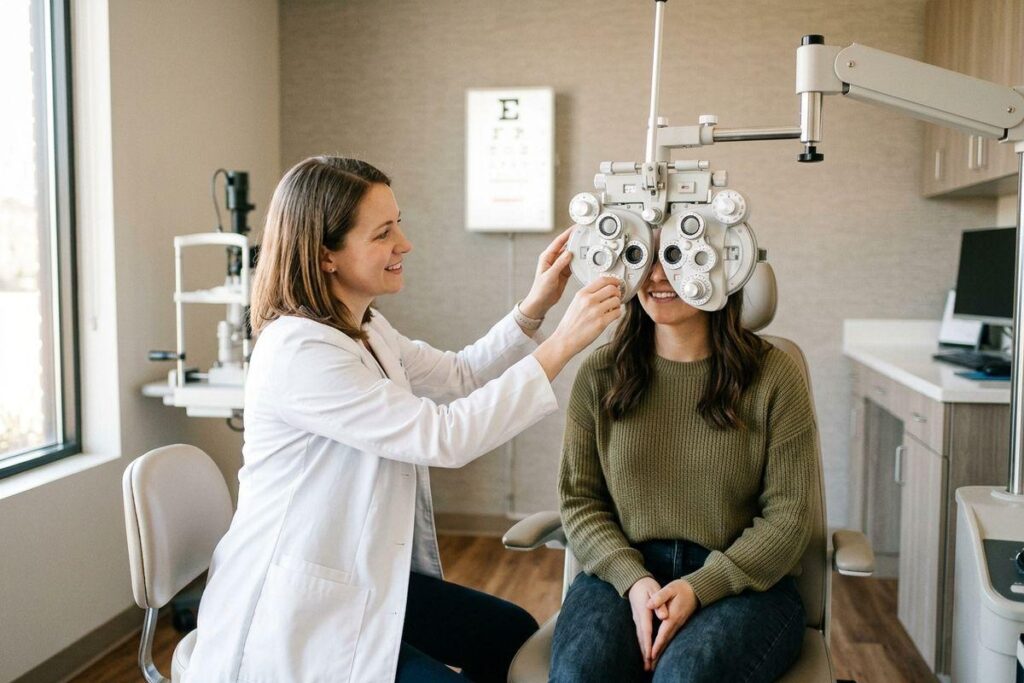
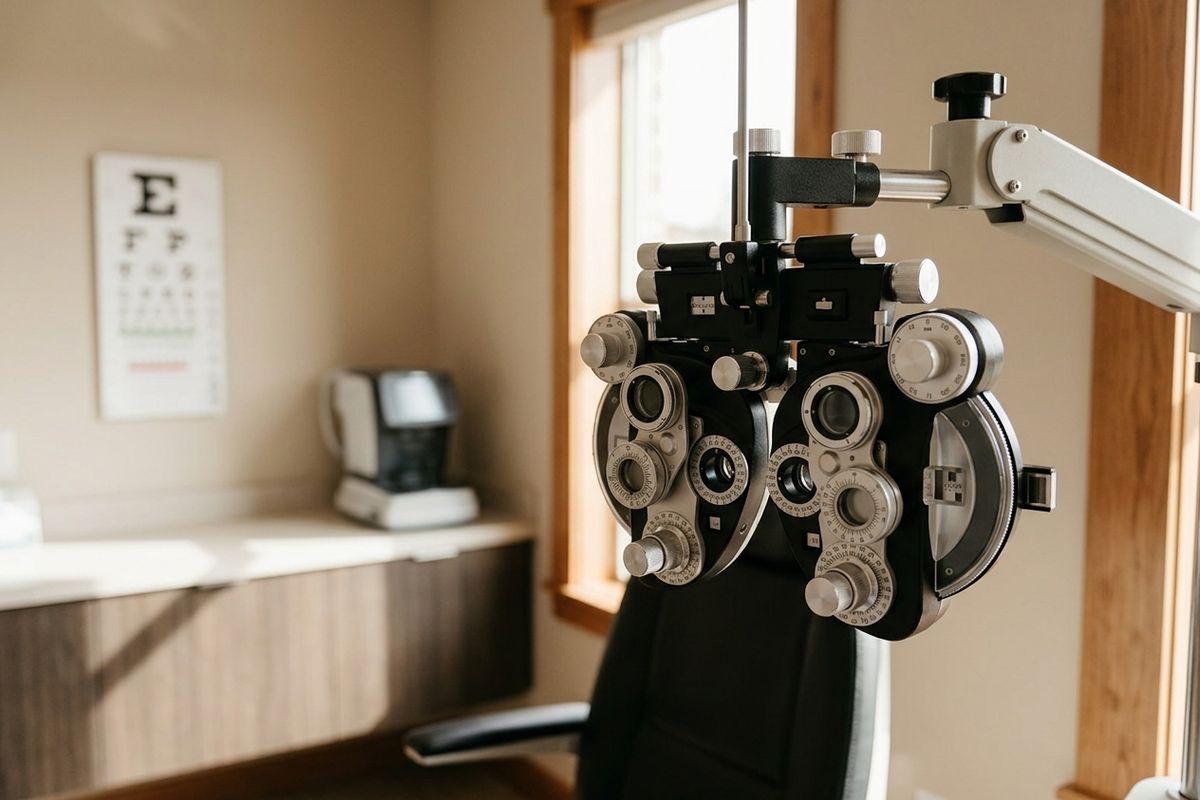
- You look through a phoropter, the mask-like device with rows of lenses.
- You pick which lens looks clearer as the doctor flips between options.
There are no wrong answers. You just share what looks sharper, and your eye doctor fine-tunes from there.
How to Get Ready
A little prep helps make your visit smoother. Bring your current glasses or contacts so your eye doctor can compare them to your new numbers.
Jot down any recent changes too. Maybe night driving feels harder, or your eyes tire by the afternoon. Small notes like these help our team tailor your care.
Insurance and Cost Questions Answered
Coverage can feel confusing, so here’s the short version. Vision plans usually handle routine services like your refraction and glasses. Medical plans tend to step in when there’s an eye condition to treat.
Some plans bill the refraction separately from the rest of your eye exam. That’s why you might see it as its own line, and it helps to ask ahead so nothing surprises you.
As for timing, many adults benefit from a visit every 1 to 2 years, and sooner if your vision shifts. Our team can help you land on a schedule that fits your family.
Come See Us
At Eyes on Westlake, our team takes time to explain every step in plain language, then helps you find frames from the optical boutique that keep you looking good. Schedule your visit with your eye doctor in Westlake today for clear vision and a warm, welcoming experience.