


Key Takeaways
- Glasses and contact lens prescriptions are two separate things, even when they correct the same vision.
- Glasses sit about 12 millimeters from your eyes, while contacts rest right on the surface, which changes the lens power you need.
- A contact lens prescription includes extra measurements like base curve and diameter.
- You need both a regular eye exam and a contact lens exam to get accurate prescriptions.
- Our team at Eyes on Westlake can handle both in one visit.
You might assume the numbers on your glasses prescription work for contacts too. They don’t. At Eyes on Westlake, our team can show you how each corrects your vision differently and serves a different purpose.
A glasses prescription and a contact lens prescription are two separate things, so you can’t swap one for the other.
Why the Two Prescriptions Differ
Distance from Your Eyes
Your glasses sit about 12 millimeters away from your eyes. Contacts, on the other hand, rest directly on the surface of your eye.
That small gap makes a big difference. Because contacts sit closer, the lens power needed to sharpen your vision changes. A prescription written for glasses simply won’t translate the same way for contacts.
Personalized Fit and Materials
Contacts have to match the shape of your eye. A lens that fits one person can feel scratchy or slide out of place on someone else.
The material of the lens also interacts with the surface of your eye all day long. A good fit helps your eyes stay comfortable from morning coffee to your evening drive home. That’s why fit matters as much as the power written on the prescription.
What a Contact Lens Prescription Includes
A contact lens prescription carries more detail than a glasses prescription. On top of the lens power, it maps out how the lens sits on your eye.
Here’s what you can expect to see on it:
- Base curve, which matches the curve of your eye.
- Diameter, which sets the overall size of the lens.
- Brand, lens type, and power, so you get the exact lens made for you.
Why You Need Both Exams
Your Regular Eye Exam
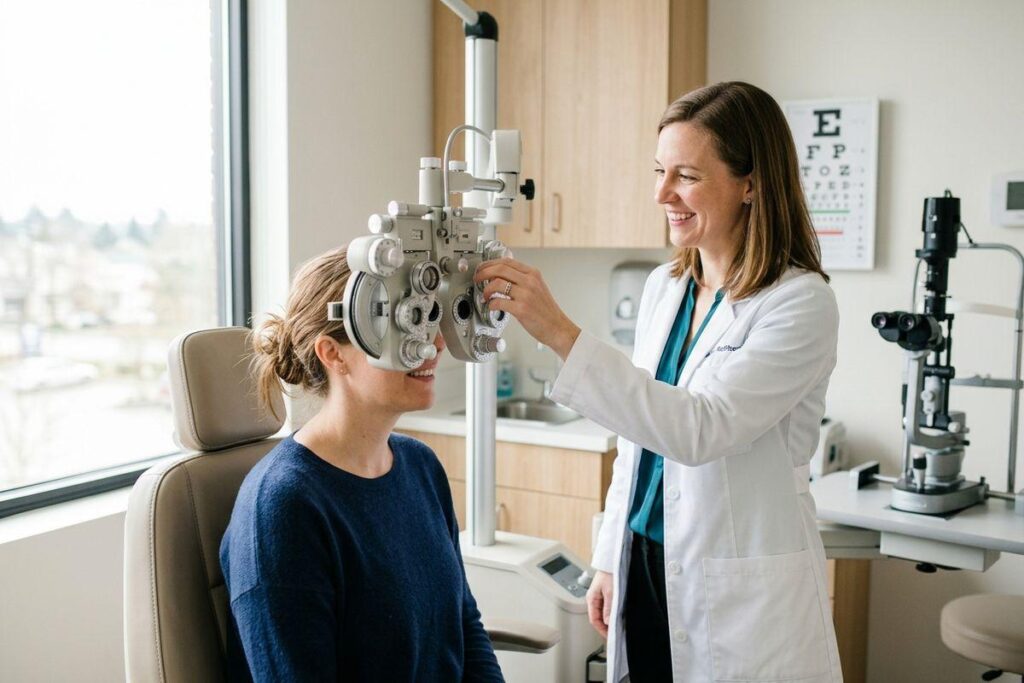
A regular eye exam looks at the whole picture of your eye health and vision. It’s the visit that keeps your glasses prescription current and catches changes early.
Our team recommends one each year for everyone in the family, from your youngest to yourself. Think of it as a yearly checkup for the eyes that carry you through every day.
Your Contact Lens Exam
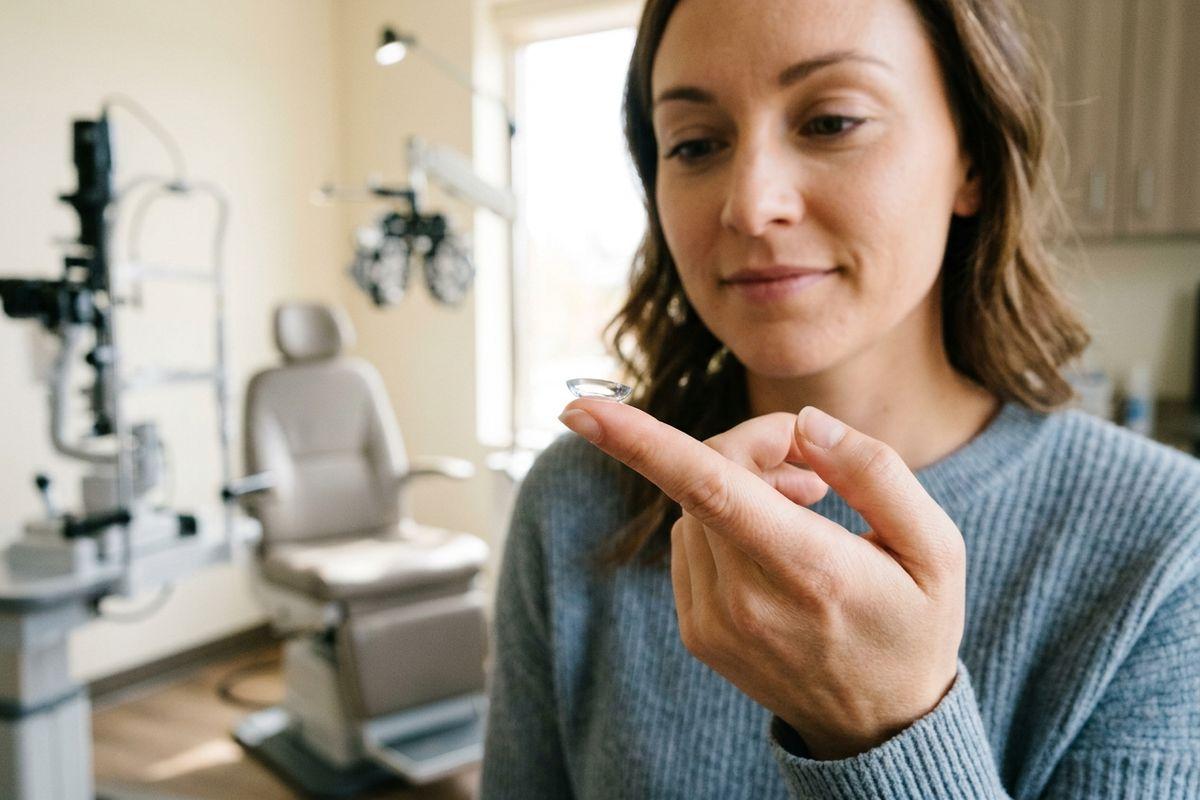
A contact lens exam goes a step further. It measures the shape and curvature of your cornea so the lens fits the way it should.
During this exam, your eye doctor checks how the lens sits and feels, then looks at your tear production and the surface of your eye. These details help your contacts stay comfortable and clear, hour after hour.
Can You Use a Glasses Prescription for Contacts?
No. A glasses prescription is missing the fit measurements that contacts require, so it can’t stand in for a contact lens prescription.
Wearing contacts based on the wrong numbers can leave your vision blurry and your eyes dry or irritated. Both exams give you the accurate details that keep your eyes healthy and your sight sharp.
Come See Us
At Eyes on Westlake, our team can walk you through both exams and answer your questions in plain, friendly terms. When you’re ready for clear vision and a comfortable fit, book your eye exam and contact lens exam today, then explore the optical boutique for handcrafted frames and eyewear while you’re here.