

Your child squints at the whiteboard from the third row, but kids in the back can see it clearly. If your family has a history of myopia (or nearsightedness), you might wonder if there’s a way to slow down your child’s vision changes before they need stronger and stronger prescriptions each year.
Myopia control lenses are specially designed contact lenses and glasses that can help slow the progression of nearsightedness in children by redirecting how light enters the eye and signaling the eye to reduce excessive growth. Eyes on Westlake offers myopia control solutions to help protect your child’s vision for the future.
How Myopia Control Lenses Work to Slow Vision Changes
These specialized lenses create controlled blur zones around your child’s central vision while keeping the main viewing area crystal clear. Think of it like having different focus zones within a single lens; your child sees clearly straight ahead, but the edges work differently.
The lens design redirects light to focus on specific areas of the retinal tissue. This creates signals that tell your child’s eye to slow down its lengthening process, which is what causes nearsightedness to get worse over time.
When your child’s eye receives these controlled signals, it naturally reduces excessive growth. This means their prescriptions can change more slowly, and they can avoid the thick glasses many nearsighted adults remember from their own childhood. Research shows that outdoor time helps protect children from myopia development, making these lenses even more effective when combined with lifestyle changes.
Types of Myopia Control Lenses Available for Your Child
Specialized Contact Lens Options
Multifocal soft contact lenses offer different prescription zones within each lens, similar to progressive glasses but designed specifically for growing eyes. Your child wears them during the day just like regular contacts, but they’re working behind the scenes to control myopia progression.
Orthokeratology (ortho-k) overnight reshaping lenses work while your child sleeps. They gently reshape the cornea overnight, so your child wakes up with clear vision all day without needing any daytime correction. These rigid lenses are removed each morning and stored safely until bedtime.
Daily disposable myopia control contacts give you the convenience of fresh lenses every day with no cleaning routine. Your child gets a new pair each morning, which reduces infection risks and eliminates the hassle of contact care solutions. Learn more about contact lens options available for your child.
Glasses Lens Technology
Peripheral defocus management lenses look like regular glasses but have special zones built into the lens edges. The center gives your child clear vision for reading and schoolwork, while the outer areas help control eye growth patterns.
Dual-focus prescription glasses combine distance and near vision correction with myopia control technology. Your child can see clearly at all distances while the lenses work to slow nearsightedness progression throughout the day.
Custom progressive lens designs are tailored to your child’s specific eye measurements and daily activities. Whether your child spends hours on homework or plays outdoor sports, these lenses adapt to their unique visual needs.
Benefits of Starting Myopia Control Early
When you begin myopia control treatment early, your child’s nearsightedness often progresses much more slowly than it would naturally. Instead of needing significantly stronger prescriptions every 6 months, changes happen gradually over longer periods.
High levels of nearsightedness increase your child’s risk of retinal detachment, glaucoma, and other serious eye complications later in life. By keeping their prescription lower, you help protect their long-term eye health and reduce these risks substantially.
Children who receive early myopia control often maintain good vision throughout their adult years. They’re less likely to experience the vision-limiting complications that can come with severe nearsightedness, often giving them more freedom in career choices and daily activities. Understanding myopia progression can help you see why early intervention matters so much.
What to Expect During Your Myopia Control Journey
Initial Assessment and Custom Fitting Process
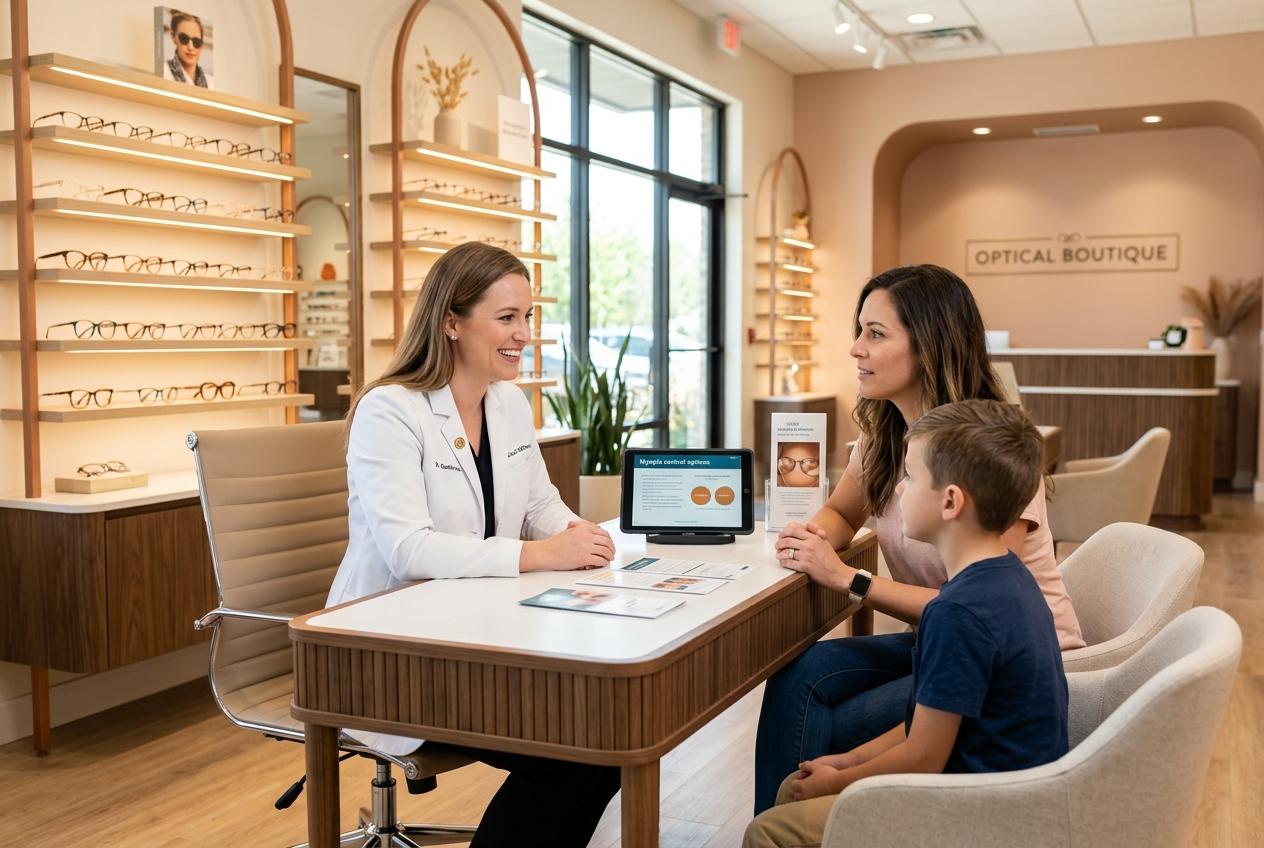
Your child’s comprehensive eye measurements include detailed scans of their eye shape, length, and growth patterns using diagnostic technology. The eye doctor also evaluates their overall eye health to determine which myopia control option works for their specific needs.
The personalized lens selection process considers your child’s age, activities, and comfort preferences. A child who plays contact sports might benefit from different options than one who spends most of their time reading or using digital devices.
Proper fitting techniques help your child feel comfortable with their new lenses from day one. Our eye care team teaches both you and your child how to handle, insert, and care for the lenses safely and effectively.
Ongoing Care and Progress Monitoring
Regular check-ups every 3 to 6 months allow the eye doctor to track how well the treatment is working for your child. These appointments are typically shorter than the initial fitting but just as important for long-term success.
Vision changes are tracked with the same technology used in the initial assessment, creating a detailed picture of your child’s eye growth over time. You can actually see the difference the lenses are making compared to typical myopia progression rates.
As your child grows and their facial shape changes, adjustments help maintain good lens performance and comfort. This might mean updating the lens parameters or switching to a different type of myopia control option as they mature. Atropine eye drops may also be recommended as part of comprehensive myopia management.
Investment in Your Family’s Vision Health
Treatment costs vary depending on whether you choose contact lenses, specialty glasses, or overnight reshaping lenses, but most families find the investment worthwhile when compared to a lifetime of increasing prescription costs. The eye care team can help you understand the different pricing options during your consultation.
Many families actually save money in the long term because myopia control reduces the need for frequent prescription updates and the high-cost, high-index lenses that severely nearsighted individuals require. You also avoid potential costs related to myopia-related eye complications later in life.
At Eyes on Westlake, our team understands that every family’s budget is different and offers flexible payment options to help make myopia control accessible for your child. You can explore different treatment approaches and find one that fits both your child’s needs and your family’s financial situation.
Protect Your Family’s Vision
Protecting your child’s vision today can make a significant difference in their quality of life for years to come. If you’re ready to explore myopia control options for your child, Eyes on Westlake offers comprehensive evaluations and personalized treatment plans that fit your family’s unique needs. Book an appointment today!