


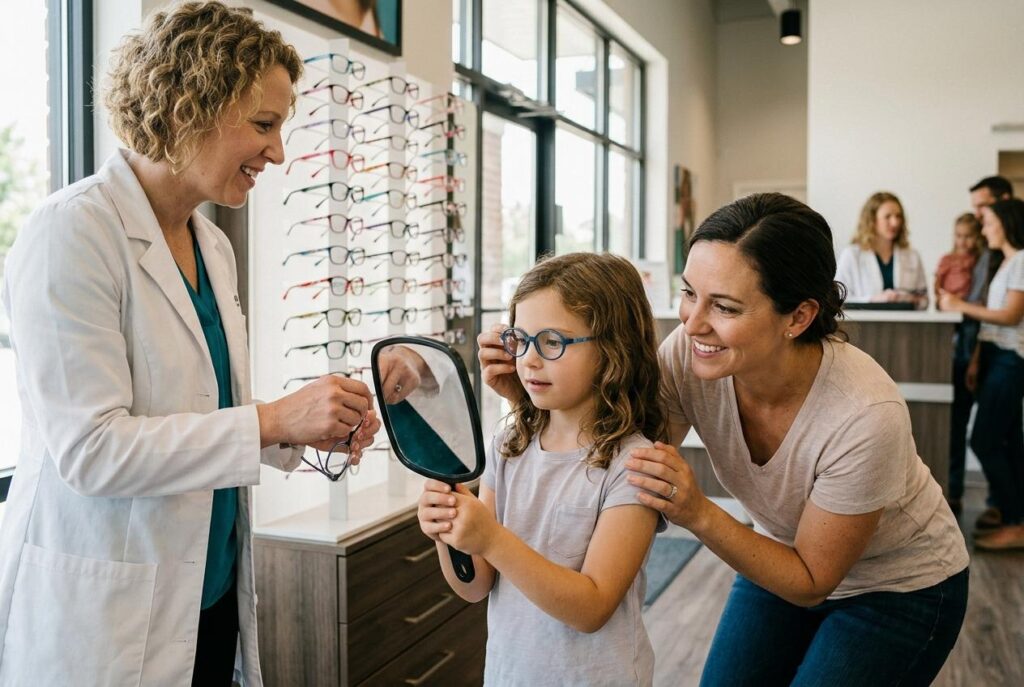
Your child just got their first prescription, and now you’re staring at walls of colorful frames, wondering where you should start. Between worrying about comfort, durability, and whether your child will wear their new lenses, choosing children’s glasses can feel overwhelming.
The key to choosing children’s glasses is finding frames that fit properly, using durable materials, matching your child’s lifestyle, choosing protective lens features, and most importantly, involving your child in the decision-making process. When you get these elements right, you’ll end up with glasses that your child feels comfortable wearing every day.
At Eyes on Westlake, we offer professional guidance to help ensure that your child’s next pair of glasses meets all of their vision needs.
Find the Right Frame Size & Fit
Measure Your Child’s Face Properly
Getting accurate measurements ensures that your child’s glasses won’t slide down their nose or pinch behind their ears. You’ll need to consider three key measurements.
- Bridge width (for nose comfort)
- Temple arm length behind ears
- Frame width across the face
The better the fit, the more comfortable the glasses, and the more likely it is that your child will wear them!
Check Key Comfort Features
Comfortable glasses reduce fidgeting and are more likely to be worn consistently. Look for frames with features that adapt to your child’s face shape and movements. For instance, flexible hinges prevent breakage, while lightweight materials reduce pressure on the nose and ears.
Choose Durable Materials & Construction
Select Kid-Friendly Frame Materials
Children put their glasses through daily adventures that would destroy adult frames. The right materials can handle drops, bends, and the occasional playground collision.
Flexible plastic frames bounce back from impacts that would crack rigid materials. Metal alloys offer strength while remaining lightweight enough for small faces. Professional opticians can guide you toward quality materials and proper care that extend frame life.
Look for Safety Features
Active children need glasses designed with safety in mind. Sharp edges or breakable components can turn what should be a simple fall into a trip to the emergency room.
Glasses with rounded corners reduce the risk of injuries, while non-toxic materials protect your child if they chew on their frames—and many young children do.
Consider Your Child’s Lifestyle & Activities
Match Frames to Daily Activities
Your soccer player needs different frames than your bookworm. Think about how your child spends their days and what challenges their glasses face.
Sports require extra-secure fits and impact protection. School environments need frames that can handle being stuffed into backpacks and dropped on hard floors. Children who experience light sensitivity may need special lens treatments for outdoor activities.
Plan for Growth & Changes
Children’s faces change quickly, and their prescriptions often change too. Smart frame choices can adapt to some of these changes, extending the life of your investment.
Expect to replace children’s glasses every 1-2 years due to prescription changes or growth. Some frames offer adjustment options that can accommodate minor changes. Understanding myopia development in children helps you prepare for potential prescription updates.
Pick Age-Appropriate Lens Options
Select Protective Lens Features
Children’s lenses need extra protection because young eyes are more vulnerable to damage. The right lens material prevents serious injury from impacts. This is especially important given that children don’t always make wise choices!
Polycarbonate lenses resist shattering better than regular plastic, making them ideal for active children. Scratch-resistant coatings keep vision clear despite rough handling. Proper UV protection is important for outdoor activities.
Add Helpful Lens Treatments
Optional lens treatments can make wearing glasses more comfortable and protect your child’s developing vision. That’s why it’s important to consider which treatments match your child’s daily activities.
Anti-reflective coatings reduce glare from classroom whiteboards and computer screens. For children showing signs of myopia, discussing myopia management options with your eye care professional is an important part of slowing the condition’s progression.
Make the Final Selection Together
Give Your Child a Choice
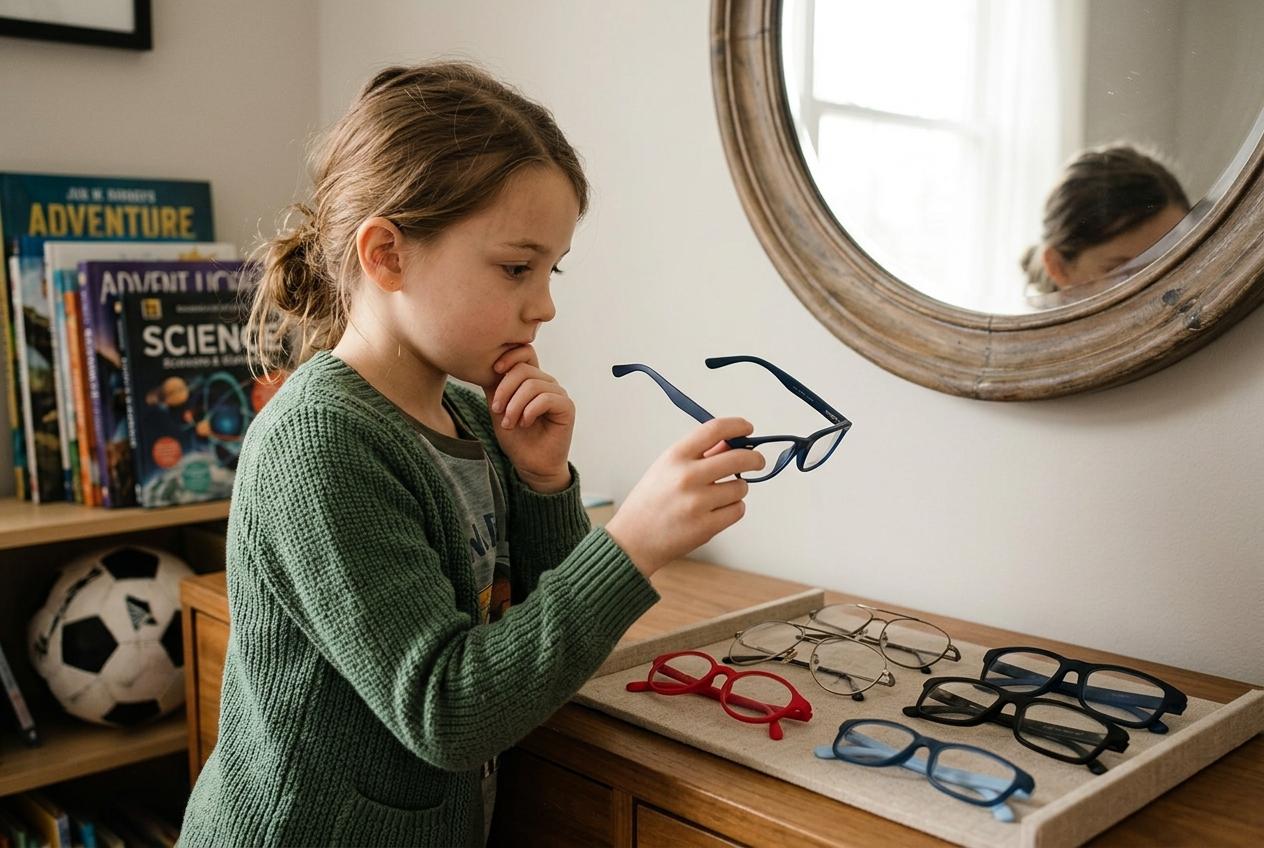
Your child needs to feel good about wearing their glasses every day. When they help choose the style and color, they’re more likely to wear their glasses consistently.
That’s why it’s important to listen to your child’s feedback during fittings. Children often notice fit issues that adults miss, and their input helps ensure that their glasses work well for daily wear. Remember that even well-fitted glasses require adjustment time.
Work with Eye Care Professionals
Professional fitting makes the difference between glasses that work well and glasses that sit in a drawer. Experienced opticians know how frames should fit children’s faces and can make precise adjustments that support wearability and comfort.
Choosing the right glasses for your child doesn’t have to be stressful. At Eyes on Westlake, Dr. Blythe McPherson and our team can offer guidance to help you find frames that work with your child’s needs. Our optical boutique even features handcrafted frames designed specifically for children.
Schedule your child’s eye exam and frame fitting at Eyes on Westlake today. You’ll discover why families throughout Westlake trust us for personalized eye care that keeps children seeing—and looking—good.